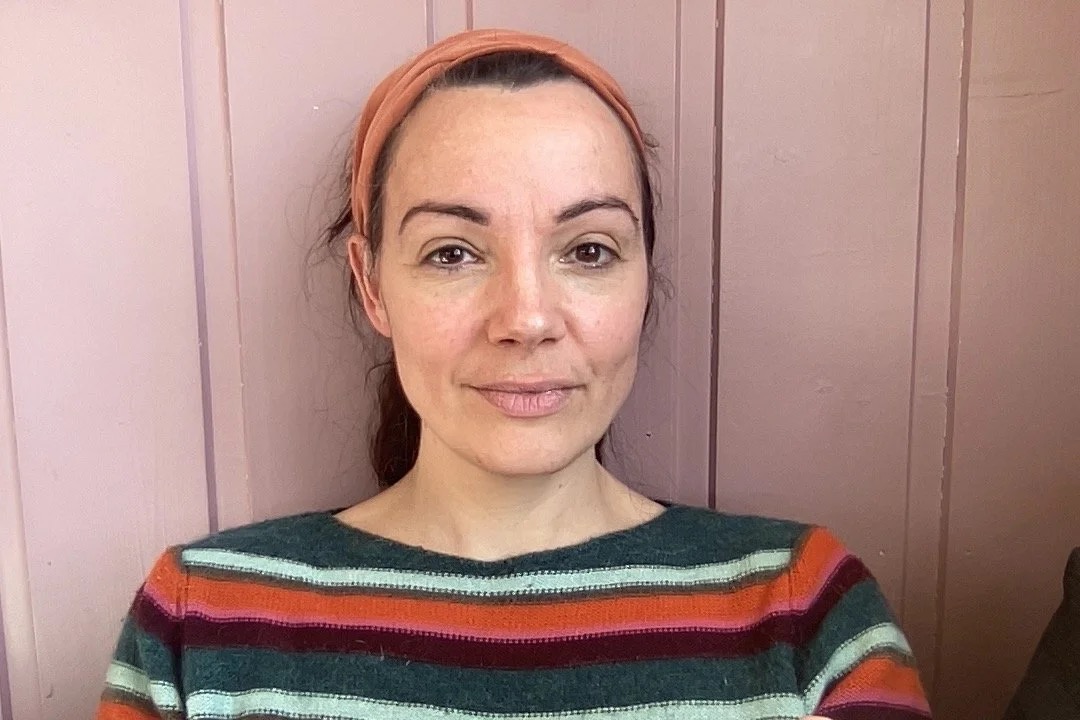
Compassionate Inquiry, Greater Oslo

Compassionate Inquiry in Greater Oslo, Norway, with a certified practitioner

I'm a Scottish psychotherapist trained directly by Dr. Gabor Mate. I offer Compassionate Inquiry therapy online via Zoom to English-speaking clients across Greater Oslo, including Baerum, Fornebu, Asker, Sandvika, and beyond. If you're looking to understand the unconscious patterns driving your struggles, I can help.

Therapy space in Oslo
Qualifications BSc Psychology · MSc Applied Behaviour Sciences
Native English speaker Scottish. I understand your cultural world.
10 years in Oslo Lived expat experience in Norway
In-person & Zoom Ruseløkkveien 59, Oslo · Anywhere via Zoom

Compassionate Inquiry for English speakers in Greater Oslo

If you live in Baerum, Fornebu, Asker, Sandvika, or anywhere else in Greater Oslo, you don't need to commute into central Oslo for therapy. I offer Compassionate Inquiry sessions online via Zoom, which means you can access this work from wherever you are.

Compassionate Inquiry is a psychotherapeutic approach developed by Dr. Gabor Mate. It focuses on uncovering the unconscious patterns formed in childhood that continue to shape how you experience your life as an adult. These patterns often show up as anxiety, depression, relationship struggles, burnout, addiction, or a persistent sense that something isn't right, even when everything on the surface looks fine.

I trained directly with Dr. Mate and I'm a certified Compassionate Inquiry practitioner. I've been working as a psychotherapist in Oslo for over 10 years, and I specialise in helping English-speaking expats navigate the particular challenges of living in Norway, the cultural isolation that can come with it, and the deeper emotional patterns that get activated when you're far from home.

What makes Compassionate Inquiry different

Most therapeutic approaches focus on managing symptoms or changing behaviours. Compassionate Inquiry goes deeper. It asks why those symptoms are there in the first place. What are they trying to protect you from? What did you learn about yourself, about relationships, about what's safe and what's dangerous, that's still running in the background?

The process is gentle, but it's also direct. I won't let you stay on the surface if I sense there's something deeper you're avoiding. But I also won't push you further than feels safe. Compassionate Inquiry is about creating a space where you can explore the parts of yourself you've learned to hide, the feelings you've learned to suppress, and the beliefs you've carried since childhood without ever questioning them.

Many of my clients are expats who came to Norway for work, for a partner, or for a fresh start, and found themselves struggling in ways they didn't expect. The loneliness, the difficulty connecting, the sense of being stuck. These aren't just situational problems. They're often connected to deeper patterns of attachment, self-worth, and emotional safety that were formed long before you arrived in Scandinavia.

Who this work is for

Compassionate Inquiry is particularly effective if you're dealing with anxiety, depression, relationship difficulties, burnout, addiction, or chronic stress. It's also powerful if you've done other kinds of therapy and felt like you understood your problems intellectually, but couldn't change how you felt or behaved.

It's for people who are ready to go deeper. If you've noticed that you keep repeating the same patterns in relationships, work, or how you treat yourself, Compassionate Inquiry can help you understand why, and begin to shift those patterns at their source.

I work with individual adults via Zoom, which means if you're based anywhere in Greater Oslo, Akershus, or even further afield in Norway, Sweden, or Denmark, you can access this work without needing to travel. All you need is a quiet space, a good internet connection, and a willingness to be honest with yourself.

Getting started with Compassionate Inquiry

The process is straightforward. Book a free consultation, and if it feels like a good fit, we'll schedule your first session.

1

Free 20-minute consultation

We'll talk about what you're struggling with, what you're hoping therapy might help with, and whether Compassionate Inquiry feels right for you. No pressure, no commitment.

2

First session

Your first full session is 50 minutes. We'll begin to explore what's brought you to therapy and start uncovering the patterns beneath your current struggles.

3

Ongoing work at your pace

Some people work with me for a few months. Others stay for a year or longer. The pace is entirely yours. We'll check in regularly about how the work is feeling and what you want to focus on next.

Andi Kerr Little, Scottish psychotherapist in Oslo
About Andi

I'm a Scottish psychotherapist who's lived in Oslo for over 10 years

I understand what it's like to be an expat in Scandinavia. I know the isolation, the cultural dissonance, the feeling of being stuck between two worlds. I also know that those struggles often activate deeper patterns that were there long before you moved abroad.

I trained as an integrative psychotherapist, which means I draw on multiple approaches depending on what each client needs. But Compassionate Inquiry has become central to my work, particularly with clients who are ready to go deeper than symptom management.

I'm a native English speaker. That matters, because therapy isn't just about language fluency. It's about cultural context, shared references, and the subtle nuances of how we talk about emotions. You won't have to translate yourself with me.

BSc Psychology, Masters in Applied Behaviour Sciences
Certified Compassionate Inquiry Practitioner (Dr. Gabor Mate)
Trained in Safe and Sound Protocol (Unyte)
10 years in private practice in Oslo
Read more about my background

Common struggles I work with using Compassionate Inquiry

These are some of the issues that Compassionate Inquiry is particularly effective for, especially in the context of expat life in Norway.

What clients say about working with me

I'd done CBT before and it helped with managing my anxiety day-to-day, but I still felt like I was missing something. Compassionate Inquiry with Andi was completely different. It wasn't about coping strategies. It was about understanding why I was anxious in the first place. Andi asked questions I'd never been asked before, and it unlocked things I didn't even know were there. I live in Fornebu and do all my sessions via Zoom, which works perfectly. I actually think I'm more comfortable being vulnerable from home than I would be in an office.

KR
K.R.
Fornebu

What I appreciated most was that Andi didn't let me stay on the surface. I'm good at intellectualising, at talking about my problems without really feeling them. She gently but firmly brought me back to what was actually happening in my body, what I was actually feeling underneath all the words. That's where the real work happened. It's been uncomfortable at times, but it's also been the most helpful therapy I've ever done. I'm based in Baerum and I was worried about finding someone who really understood my cultural background, but Andi gets it. She's Scottish, she's lived here for years, and she knows what it's like to be foreign in Norway.

MT
M.T.
Baerum

I started therapy because I was struggling with burnout and didn't know how to get out of it. What I didn't expect was to learn that burnout wasn't really the problem. It was a symptom of patterns I'd been carrying since I was a kid, patterns about needing to be productive to feel worthy, about not being allowed to rest. Andi helped me see that. She also helped me understand how being an expat in Norway had made those patterns worse, because I felt like I had to prove I belonged here. I'm still working through it, but I'm starting to feel like I can actually change. Zoom sessions from Asker have been brilliant, no commute stress.

LH
L.H.
Asker

Common questions about Compassionate Inquiry

What is the Compassionate Inquiry approach and who developed it?

Compassionate Inquiry was developed by Dr. Gabor Mate, a Canadian physician known for his work on trauma, addiction, and childhood development. The approach focuses on uncovering the unconscious beliefs and emotional patterns formed in childhood that continue to shape adult behaviour. It's rooted in the understanding that many of our struggles are not character flaws but adaptive responses to early experiences. The word compassionate is central. It's about approaching yourself with curiosity rather than judgment, and understanding why you became who you are.

How does Compassionate Inquiry differ from CBT or talk therapy?

CBT focuses on identifying and changing unhelpful thought patterns and behaviours. It's practical, structured, and often short-term. Compassionate Inquiry goes deeper. It asks why those thought patterns are there in the first place, and what they're protecting you from. Traditional talk therapy can sometimes stay on the surface of current problems. Compassionate Inquiry connects those problems to their roots in early attachment, family dynamics, and the emotional lessons you learned as a child. It's less about fixing symptoms and more about understanding the person beneath them.

What does a Compassionate Inquiry session actually feel like?

It's conversational, but it's also focused. I'll ask questions that help you explore what's beneath the surface of your struggles. Sometimes I'll notice something in your body language, your tone of voice, or the way you phrase something, and I'll gently point it out. The goal is to help you become aware of the unconscious patterns that are running in the background. Sessions can be emotional. You might cry, feel anger, or experience a sense of relief. That's normal. It's also okay if you don't feel much at first. Some people take time to open up, and that's fine. The pace is yours.

Is Compassionate Inquiry a good fit for anxiety or trauma?

Yes, particularly if your anxiety or trauma has roots in childhood experiences or attachment wounds. Compassionate Inquiry can help you understand why your nervous system responds the way it does, and begin to shift those responses. It's not a quick fix. Trauma work takes time, and it needs to be paced carefully so you don't become overwhelmed. I'm trained in trauma-informed practice, and I also use the Safe and Sound Protocol when appropriate, which helps regulate the nervous system and makes deeper emotional work safer.

What does Dr. Gabor Mate say about the connection between childhood and adult patterns?

Dr. Mate's work emphasises that the way we were treated as children, and the emotional environment we grew up in, shapes our beliefs about ourselves, our relationships, and our place in the world. Those beliefs often become unconscious. We carry them into adulthood without realising it, and they influence everything from our career choices to our intimate relationships. Compassionate Inquiry helps bring those beliefs into awareness so you can question them, understand where they came from, and decide whether they still serve you.

How do I know if Compassionate Inquiry is the right approach for me?

If you've noticed that you keep repeating the same patterns, if you've done other therapy and felt like something was missing, or if you sense that your current struggles are connected to something deeper, Compassionate Inquiry might be a good fit. It's also suited to people who are ready to be honest with themselves, even when that's uncomfortable. The best way to know is to book a free consultation. We'll talk about what you're struggling with, and I'll be honest about whether I think this approach can help.

Can Compassionate Inquiry be combined with other therapeutic approaches?

Yes. I'm trained as an integrative psychotherapist, which means I draw on multiple approaches depending on what each client needs. Compassionate Inquiry is often the core of my work, but I might also use somatic techniques, attachment theory, or trauma-informed practices. If you're already working with another therapist or modality, we can talk about how Compassionate Inquiry fits into that. Some clients do Compassionate Inquiry alongside medication, bodywork, or other support. It's not an either-or situation.

Book Your Free Consultation

Not sure if Compassionate Inquiry is right for you? Let's talk. I offer a free 20-minute consultation where we can discuss what you're struggling with and whether this approach might help. No pressure, no obligation.

Your questions about Compassionate Inquiry in Greater Oslo

Compassionate Inquiry is a psychotherapeutic approach developed by Dr. Gabor Mate that focuses on uncovering the unconscious patterns formed in childhood that continue to shape our adult lives. Unlike CBT, which focuses primarily on changing thoughts and behaviours, or traditional talk therapy, which can stay on the surface of current problems, Compassionate Inquiry goes deeper. I guide you to explore the emotional truth beneath your symptoms, behaviours, or struggles. The process is gentle, but it asks real questions about what you learned to believe about yourself, what you learned was safe or dangerous, and what parts of yourself you learned to hide. Many clients find it particularly powerful because it connects present-day struggles, like anxiety or relationship difficulties, directly to their roots. It's not about blame or revisiting trauma for the sake of it. It's about understanding how you adapted as a child, and how those adaptations might no longer serve you now.

Yes, I'm a certified Compassionate Inquiry practitioner. I trained directly with Dr. Gabor Mate and completed the full Compassionate Inquiry training programme. This isn't something I've picked up secondhand or learned from a book. I've studied the approach in depth, practiced it extensively under supervision, and continue to engage with the Compassionate Inquiry community of practitioners. Dr. Mate's work has had a profound influence on the way I work, particularly his understanding of trauma, addiction, and how early attachment experiences shape who we become. I bring that training into every session, but I also bring my own experience as a psychotherapist with a background in integrative therapy, which means I can adapt the approach to what each client needs. If you're curious about the training itself, or want to know more about how I work, we can talk about that in your free consultation.

Compassionate Inquiry is particularly effective for issues that have roots in early life experiences, especially where you sense that your current struggles are connected to patterns you can't quite shift on your own. It works well for anxiety, depression, relationship difficulties, addiction, chronic stress, burnout, and self-worth issues. It's also powerful for people who have done other kinds of therapy and feel like they understand their problems intellectually, but still can't change how they feel or behave. Many of my clients are expats who are experiencing a kind of identity crisis, loneliness, or difficulty connecting, and Compassionate Inquiry helps them see how their early attachment patterns are playing out in their current lives. If you've ever felt like you're repeating the same patterns in relationships, work, or how you treat yourself, Compassionate Inquiry can help you understand why, and begin to shift those patterns at their source.

There's no fixed timeline. Some people work with me for a few months and feel they've gained what they needed. Others stay for a year or longer, particularly if they're working through complex trauma, long-standing relationship patterns, or addiction recovery. Compassionate Inquiry isn't a quick fix. It's deep work, and it takes time to uncover and shift unconscious patterns that have been with you since childhood. That said, many clients notice shifts quite early, sometimes even after the first few sessions. They might notice they're responding differently in situations that used to trigger them, or they feel more connected to themselves. The pace is entirely yours. I don't push you faster than feels safe, and I don't hold you back if you're ready to go deeper. We'll talk regularly about how the work is feeling and what you want to focus on next.

Yes, absolutely. I offer Compassionate Inquiry both in person at my Oslo practice and via Zoom, and the approach works equally well online. In fact, many of my Greater Oslo clients prefer Zoom because it saves them the commute into central Oslo, particularly if they're based in Fornebu, Baerum, or Asker. The intimacy and depth of the work isn't lost over video. If anything, some clients find it easier to be vulnerable when they're in their own space. I make sure the session feels safe, private, and focused. You'll need a quiet space where you won't be interrupted, a good internet connection, and ideally headphones so we can hear each other clearly. Everything else stays the same. The quality of the connection, the depth of the inquiry, and the support I offer are exactly what you'd experience in person.

Yes, very much so. Many of my Compassionate Inquiry clients have done CBT, talk therapy, or other modalities and found them helpful to a point, but felt something was still missing. Compassionate Inquiry goes deeper than most approaches. If you've done therapy that focused on managing symptoms, changing thoughts, or developing coping strategies, Compassionate Inquiry might be the next step. It asks why those symptoms are there in the first place, and what they're trying to protect you from. It's also a good fit if you're someone who intellectualises easily, if you're good at talking about your problems but struggle to actually feel or change them. Compassionate Inquiry brings you back into your body and your emotional truth. If you've done trauma work before, particularly somatic or attachment-focused therapy, you'll likely find it complements what you've already learned. It's not about starting over. It's about going deeper.

I charge a standard session rate for all therapy services, including Compassionate Inquiry. Sessions are 50 minutes. I offer both in-person sessions at my Oslo practice and online sessions via Zoom at the same rate. Payment can be made via invoice or Vipps. If cost is a barrier, let's talk about it in your free consultation. I occasionally have a sliding scale spot available, and I'd rather have an honest conversation than have you not reach out at all. My goal is to make this work accessible to people who genuinely need it, while also sustaining a practice that allows me to do this work well.

The first step is to book a free 20-minute consultation. You can do that using the form on this page, or by calling or emailing me directly. In that conversation, we'll talk about what you're struggling with, what you're hoping therapy might help with, and whether Compassionate Inquiry feels like the right approach for you. There's no pressure to commit. It's a chance for you to ask questions, get a sense of how I work, and decide if we're a good fit. If we are, we'll schedule your first full session. If we're not, I'll do my best to point you toward something that might be a better match. You can book in-person sessions at my Oslo practice or online via Zoom, whichever works better for you.

Other Regions
Related Services

Ready to get started?

Book a free 20-minute consultation to talk about what you're struggling with and whether Compassionate Inquiry might help. No pressure, no obligation.

Book Free Consultation +47 906 02 994