Identity can feel precarious when the external world shifts. When home is no longer home, when the life you built stops fitting, when the question of who you are becomes harder to answer.
Identity is not something most people think about consciously until it stops feeling stable. For many expats, that instability begins the moment they move. The cultural context that once held their sense of self in place is no longer there. The references that used to signal who you are, accent, humour, shared history, stop working. What felt natural at home can feel effortful here. What used to be automatic now requires translation.
The question of belonging becomes sharper when you live somewhere that is not your country of origin. Belonging is often misunderstood as a feeling of comfort or acceptance. In my experience, it is more accurately described as a sense of being contextually legible. When you are living in a culture that is not your own, that legibility is often missing. You might feel like you are performing a version of yourself that is slightly off, or that different parts of your identity come forward depending on who you are with and what language you are speaking.
This is not a symptom of failure or a sign that something is wrong. It is a normal response to living between cultural worlds. But that does not mean it is easy to live with. The disorientation can show up as a low-grade sense of not quite fitting, or as a more acute feeling of being unmoored. Some people describe it as existential. Others describe it more practically, as a difficulty making decisions because they are no longer sure what they want or who they are making the decision for.
What becomes clearer over time, if you pay attention to it, is that identity is not fixed. It is contextual, relational, and always being negotiated. The work in therapy is not to reconstruct who you used to be. It is to explore who you are becoming, and whether that version of yourself feels honest or sustainable.
Identity work in therapy is not about finding a fixed answer to the question of who you are. It is about creating space to think clearly about that question, and to notice the ways you have been answering it, consciously or not.
In our sessions, we start by paying attention to the moments when your sense of self feels most unstable or most clear. What contexts bring forward which parts of you? What roles have you been occupying, and are they roles you chose or roles you inherited? When do you feel most like yourself, and when do you feel like you are performing? These are not rhetorical questions. They are places to begin.
Much of the work involves looking at the stories you carry about yourself. Where they came from, who they serve, which ones feel true, and which ones feel like obligations. For expats, this often includes looking at the cultural assumptions you absorbed growing up, how those assumptions shape your expectations of yourself, and what happens when those expectations no longer fit the life you are living. This is not about rejecting your culture of origin. It is about understanding how it shapes you, so you can decide which parts to keep and which parts to let go.
The question is not who you were, but who you are becoming when the external structure is no longer holding you in place.
We also look at the ways identity intersects with other aspects of your life. How your sense of self affects your relationships, your work, your decisions about where to live and what kind of life you want. Identity is not separate from the rest of your experience. It is woven through it. The clarity you gain in this work often has effects that reach beyond the original question. People report feeling more grounded, more able to make decisions, more able to tolerate uncertainty. Not because the uncertainty has gone away, but because they have a clearer sense of what matters to them underneath it.
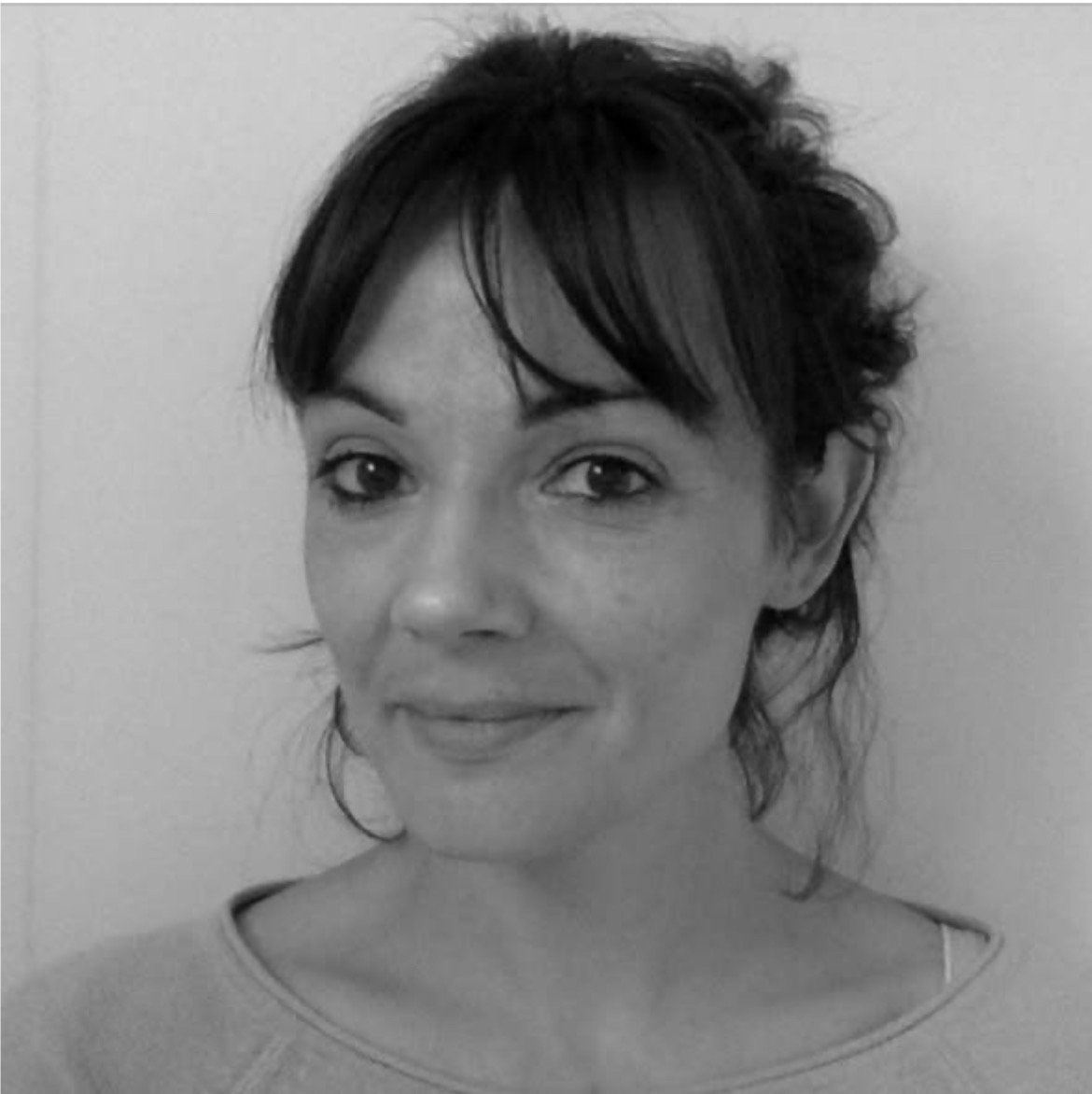
I am originally from Scotland and have been living in Oslo for over 10 years. I know what it is like to move to a country where the language, the culture, and the social codes are different from what you grew up with. I know what it is like to build a life somewhere that is not home, and to realise over time that the question of where home is becomes more complicated than you expected.
I trained in integrative psychotherapy, which means I draw on different therapeutic approaches depending on what is most useful for the work we are doing. I am also trained in Compassionate Inquiry, a method developed by Dr. Gabor Maté that focuses on understanding the underlying patterns and beliefs that shape behaviour. I work with individuals and couples, both in person at my practice in central Oslo and via Zoom for clients elsewhere in Scandinavia.
What matters most in this work is the quality of the relationship. Therapy is not something I do to you. It is something we do together. My role is to create the conditions in which you can think clearly about your life, and to pay close attention to what emerges in that process. I take the work seriously, but I do not take myself too seriously. If this sounds like the kind of space you are looking for, get in touch.
Identity is shaped by context. When the context changes, the work is to understand what remains and what needs to shift.
Identity is the collection of beliefs, roles, and narratives you carry about who you are. Much of it is formed in relation to your cultural context. When you move abroad, the markers that used to signal your identity stop working in the same way. Your accent becomes noticeable. Your cultural references are no longer shared. The social roles you occupied at home may not exist here. This can create a sense of disorientation because the external structure that used to hold your sense of self in place is no longer there.
Cultural identity is the part of your identity that is shaped by the culture you grew up in. It includes language, values, social norms, and the unspoken assumptions about how the world works. When you move to a different culture, those assumptions are constantly being challenged or questioned. This can feel destabilising because much of cultural identity operates unconsciously. You may not realise how much of your sense of self is tied to your culture of origin until it is no longer surrounding you.
A third culture adult is someone who has spent significant parts of their life living between cultures. They do not fully belong to their culture of origin, and they do not fully belong to the culture they are living in. Instead, they create a third cultural space that is a hybrid of both. This can be enriching, but it can also be lonely. Third culture adults often describe feeling like they are translating themselves depending on who they are with, and struggling with the question of where home is.
Identity is not fixed. It shifts as your circumstances change. Major transitions, career changes, relationship changes, moving countries, becoming a parent, can all bring identity questions to the surface. What worked in one phase of life may not work in the next. The challenge is not to hold on to a version of yourself that no longer fits, but to allow yourself to evolve. Therapy can help you navigate those transitions with more clarity and less resistance.
A chronic sense of not belonging can contribute to anxiety, depression, and loneliness. When you do not feel contextually legible, it is harder to relax. You might find yourself second-guessing social interactions, or feeling like you have to work harder than others to be understood. Over time, that can be exhausting. It can also affect your willingness to form connections, because forming connections requires vulnerability, and vulnerability requires a baseline sense of safety that is harder to access when you do not feel like you belong.
Identity and self-worth are closely linked. If your sense of identity is tied to external markers, achievements, roles, relationships, your self-worth can become fragile. When those markers shift, your sense of worth can shift with them. Identity work often involves disentangling self-worth from external validation, and finding a more stable internal reference point. This does not mean becoming independent of context. It means becoming less dependent on context for your sense of value.
If you are asking yourself questions like: Who am I when this version of my life is no longer the case? Do I even know what I want anymore? Why does it feel like I am performing all the time? Where do I actually belong? Those are identity questions. They may show up as anxiety, low mood, relationship difficulties, or a sense of aimlessness. But underneath, the struggle is often about not knowing who you are or where you fit.
I moved to Oslo three years ago and thought I had adjusted. But I kept feeling like I was acting a part, especially at work. Andi helped me see how much of my identity was still tied to who I was in the UK, and how little space I had given myself to figure out who I was becoming here. The work was slow but it shifted something fundamental. I feel less like I am performing and more like I am just living.
What I appreciated most was that Andi never tried to tell me what I should feel or who I should be. She just asked really good questions and gave me space to think. I came because I felt completely unmoored after a big career change and a move to Norway. I left with a much clearer sense of what matters to me underneath all the external noise. It took longer than I expected but it was worth it.
I grew up in four different countries and never really felt like I belonged anywhere. Talking to Andi was the first time someone understood that without trying to fix it. She helped me see that the discomfort I felt was not a problem to solve, but something to understand better. I still do not have all the answers, but I feel less anxious about not having them. That in itself is a huge shift.
20 minutes by phone or Zoom. No obligation. We will talk about what you are looking for and whether this feels like the right fit.
Identity work in therapy begins with noticing the questions you are asking yourself. Not the dramatic, existential ones necessarily, but the quieter ones: who am I when this version of my life is no longer the case? When I am not defined by where I come from, or what I do, or who I am to other people? In sessions, we pay attention to the moments when identity feels like it shifts, or when a sense of self feels more available or less available. We look at the stories you carry about yourself, where they came from, which ones still serve you, and which ones you are trying to live up to even when they no longer fit. This work often involves looking at the roles you occupy and whether they feel like choices or obligations. For expats, it includes the ways culture shapes identity without you always realising it, and what happens when those cultural references no longer surround you. It is exploratory work, not problem-solving.
The question of identity is relevant to anyone going through a period of change or transition. But for expats, the disruption is often more acute because the external markers of identity, things like language, place, social context, are all in flux at the same time. When you are living in a culture that is not your own, many of the cues that used to tell you who you are are no longer there. You might find yourself performing a version of yourself that feels slightly off, or noticing that different parts of your identity come forward depending on whether you are speaking English or Norwegian, or whether you are with expats or locals. That kind of split is worth exploring, not because it is a problem, but because it can feel destabilising. So yes, this work is relevant to expats, and yes, it is relevant to anyone whose sense of self is shifting.
Yes. I work in English. I am Scottish, and I have been living in Oslo for over 10 years, so I understand both the cultural reference points you are coming from and the expat experience of being here. Language matters in therapy. Identity work often involves subtle distinctions in how you think about yourself, and that level of nuance requires being able to work in your first language. If you are reading this and feeling a sense of relief that you can finally speak in your own voice, that is not a small thing. Many of my clients are English-speaking expats from the UK, US, Canada, Australia, and other parts of Europe. Sessions are either in person in Oslo or via Zoom if you are elsewhere in Scandinavia.
Yes. I offer sessions both in person at my practice in central Oslo and via Zoom. Many of my clients are based in other parts of Norway, Sweden, or Denmark, and Zoom allows us to work together without the constraint of geography. The quality of the work is the same. What matters is the quality of attention, the space we create, and the continuity of the relationship. Some people prefer the structure of coming to a physical space. Others find that the flexibility of Zoom makes it easier to fit therapy into their life, particularly if they travel frequently or have unpredictable schedules. Both formats work. If you are unsure which would suit you, we can talk about it in the free consultation.
There is no fixed timeline. Identity work is not a six-week programme with a set outcome at the end. Some people come for a few months and gain enough clarity to move forward. Others work over a longer period because the questions keep evolving. What I notice is that this work tends to deepen over time. The early sessions might focus on naming the disorientation or confusion you are feeling. Later sessions often involve a more nuanced exploration of who you are becoming, rather than who you used to be. The pace is entirely yours. Some people come weekly, others fortnightly, depending on what feels sustainable. What matters is that there is enough continuity for the work to build, and enough space between sessions for things to settle.
General talk therapy often focuses on managing symptoms or working through a specific issue. Identity work is broader and slower. It involves asking questions that do not always have immediate answers. Who am I when the external structure changes? What parts of myself have I been suppressing or performing? What does it mean to feel like I belong, and do I even want that? These are not problems to be solved but questions to be explored. The work is less about finding solutions and more about creating space to think clearly about your life. That said, identity work often overlaps with other issues. If you are struggling with anxiety, depression, or relationship difficulties, those may be connected to unresolved questions about identity. We address what is most pressing, but we also pay attention to the underlying structure.
Sessions are 50 minutes and cost NOK 1,200. I offer a limited number of reduced-rate slots for people in financial difficulty. If cost is a barrier, mention it when you get in touch and we can talk about what is possible. Payment is by Vipps or bank transfer after each session. I do not work through the public health system, so sessions are private and not covered by Norwegian health insurance. Some international health insurance policies do cover psychotherapy, so it is worth checking if that applies to you. There is also a free 20-minute initial consultation, either by phone or Zoom, so you can get a sense of whether this feels like the right fit before committing to paid sessions.
The first step is a free 20-minute consultation. You can book that by filling in the form on this page, or by emailing me directly at andikerrlittle@gmail.com or calling +47 906 02 994. In that call, we will talk briefly about what you are looking for, how I work, and whether it feels like a good match. If it does, we will arrange a first full session. If it does not, I will do my best to suggest other options. There is no obligation and no pressure. The consultation exists so you can make an informed decision about whether this is the right kind of support for you at this point. After that, if we do start working together, sessions are usually weekly or fortnightly, depending on what makes sense for your situation.
Book a free 20-minute consultation by phone or Zoom. We will talk about what you are looking for and whether this feels like the right fit.
Book a free call +47 906 02 994